Uganda is endowed with various mineralsi The sector presents an opportunity for Public - Private Partnerships to exploit the mineral resources as well as add value to themi Investment opportunities in minerals sub-sector include exploitation and value addition of the following: a) 300 million tons of iron ore in South Western Uganda, b) 3 billion of Rare Earth minerals that include alumnus clays, c) 300 million tons of bentonite to be used for production of drilling mud required in oil production, 30 million tons of glass sand for manufacturing of sheet glass to be used for building purposes, d) 3i4 billion tons of graphite e) 100-200 million tons of vermiculite in Eastern Uganda f) Other minerals such as wolfram, copper, zinc, cobalt, nickel and goldi The minerals sector is completely liberalized to enable private sector to investment profitably in the sector. A number of companies have developed viable investment projects and are looking for partnership to implement them
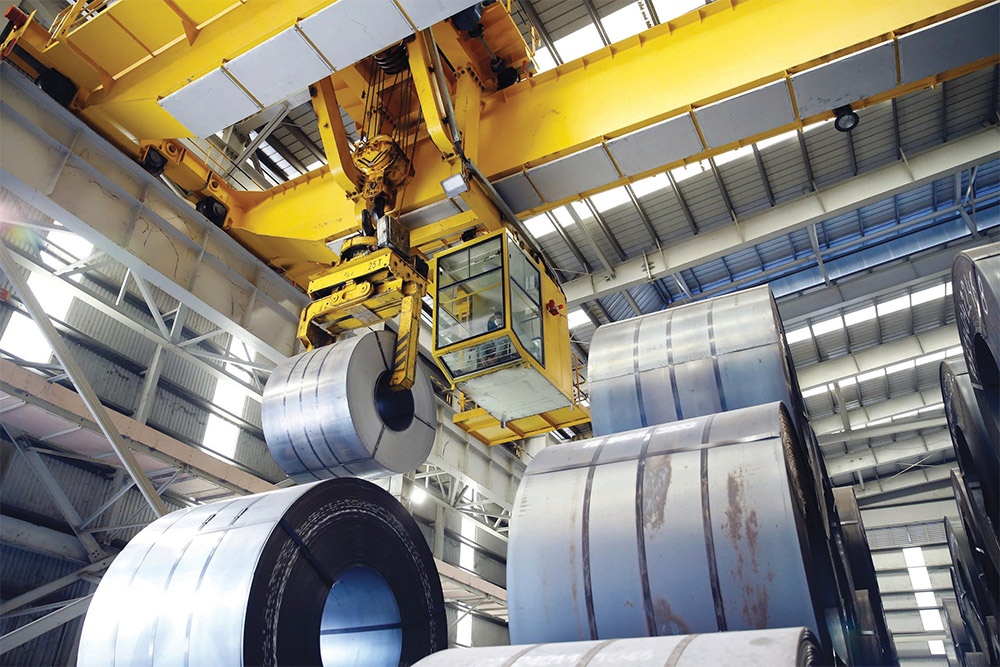
Muko Iron & Sheet Project
Proposed Ivesntment: USD 500 Million
Financing Type: Equity & Debt Project
Site / Location: Kabale District
Project Description
The rock surface area is 80 hectares, and its 100m above the ground. The distance from Mubende Town to the site is 35Km. The UTM location coordinate of the area is 294868 mE
Deposit Quality and Quantity:
The bulk of the deposit at Bukusu consists of soft apatite-bearing soil, varying from 13% P2O5 with a resource of 50 Million Metric Tonnes.
Demand Drivers
• A minimum
of 800,000t/y of iron ore mining is required to satisfy the Ugandan Market,
while 4 million I/year is required inthe East African Region (Uganda, Kenya,
Tanzania).
• Construction
and infrastructure contribute 12% and 11% respectively to GDP with a growth
rate of 8.1%and 7.1%. The two sectors are biggest consumers of iron and steel.
Heavy profiles and structural steel products are almost absent in Uganda due to
unavailability of special steel products (High Alloy) that require dedicated
production plants.
• Uganda
has several steel players of varying production capacities and operating at
different stages of the downstream Iron and Steel (I&S) value chain. The
key players in Uganda are steel processors using semi-finished steel sourced
from abroad.
• Existing
opportunity to produce 0.5Mt/y of iron ingots/briquettes/sponge from its iron
ore resource to feed into the existing steel industry.
• Uganda’S
iron ore targets the East African Community region. Uganda's intra trade is
currently at 40% and expected to grow due to Africa Free Continental Trade Area
and existing common markets.
Market Size Local Market
Uganda's import bill for steel products currently valued at
USD350 million.
Current East African Block
There is huge opportunity in the East African Region (Kenya
and Tanzania) currently importing 4miIIion metric tons of steel per year, while
Ugandan demand pushed 1 million tons per year. Uganda stands to benefit from
this regional growth in demand by supplying its steel products to the region.
The EAC region covering Burundi, the Democratic Republic of the Congo, Kenya,
Rwanda, South Sudan, Tanzania, Somalia and Uganda, has seen a sharp increase in
the demand for steel. Net imports of iron and steel by volume has grown by
about 11.4% annually between 2010 and 2019.
Tax incentives for Iron Ore
• 100% Cost
recovery on exploration, development and production.
• 100%
deduction of Scientific research expenditure
• 100% tax
allowable on training costs
• Indefinite
cash relief of VAT- deemed VAT on supplies by the contractor.
• Indefinite
VAT exemption on other inputs to mininp.
